


With AI features expanding rapidly in search and professionals closely watching how these changes affect visibility, it felt like the right time to invest in deeper knowledge analyze the latest AI SEO statistics for 2025. I decided I will be attending a course on AI-focused SEO (GEO, AIO, SXO or whichever term you prefer) to upskill and exchange insights with others in the field.
Before starting, I wanted to understand the general sentiment around AI-focused SEO and see how SEO professionals view AI’s impact. To explore this, I used AI-driven audience profiling to uncover insights from over 500,000 posts and threads across platforms like Reddit, LinkedIn, and forums (supplemented with several industry surveys) over a year ending August 31, 2025.
Key statistics
- 20% of SEO discussions show rising negativity toward AI-generated content
- 35% of conversations highlight efficiency gains in technical SEO
- Ranking anxiety increases by 25% across SEO discussions
- 28% of conversations focus on SEO job security concerns in the AI era
- 42% of discussions raise concerns about AI-driven traffic decline
- 86% of discussions include experimentation with AI tools and workflows
- 45% of discussions reflect cautious optimism about AI’s strategic value
The TL;DR: The data tells a story of rapid sentiment shifts, growing anxiety, but also unexpected opportunities. It reveals both genuine concerns and practical adaptations happening right now. And I’m experiencing this shift firsthand: traditional metrics like click-through rate are becoming less reliable as AI overviews and answer boxes intercept queries with zero-click results. Search behavior is shifting, and our playbook has to shift with it.
Here’s more in detail what the data shows about where we’re headed according to other SEO professionals.
20% of SEO discussions show rising negativity toward AI-generated content
Negative sentiment about AI-generated content rose 20% while positive sentiment fell by 15% over the 12-month period analyzed. This isn’t a small adjustment — it’s a measurable reversal of early enthusiasm.
In late 2024, SEO forums buzzed with excitement about AI’s potential. Posts focused on “how to use ChatGPT for SEO” and productivity gains. By spring 2025, the tone had shifted. Discussions centered on “how to mitigate AI SEO risks” and learning new defensive skills.
The Reddit-based sentiment analysis captured this transition perfectly. What started as optimism about automation and efficiency became caution about quality control and search penalties.
What caused this shift? Three factors emerged from the discussion data:
- Quality issues became undeniable: SEO professionals started experiencing “AI hallucinations”, i.e. nonsensical output that required extensive editing.
- Search engine penalties grew more real: By mid-2025, discussions frequently mentioned Google’s improved ability to detect and potentially penalize AI-generated content. The fear became concrete rather than theoretical.
- Efficiency promises didn’t materialize: Many SEOs found that the time saved generating AI content was offset by editing requirements. As one consultant warned, cutting corners with AI “costs more in the long run” without careful review.
The numbers show this wasn’t just a few vocal critics. This was industry-wide sentiment change captured across multiple platforms and discussion threads.
35% of conversations highlight efficiency gains in technical SEO
Here’s where the data gets interesting. While negative sentiment about AI content rose 20%, positive sentiment toward AI in technical SEO roles increased 35%. The SEO community isn’t anti-AI — they’re discriminating about where AI adds value.
Technical SEO wins big
Site audits, log file analysis, keyword research, and data crunching: these “boring, complicated tasks” show clear AI advantages according to forum discussions. One industry leader noted that handling routine tasks with AI can “liberate human experts” for strategic work.
The enthusiasm for AI tools in technical SEO makes sense when you look at the specific mentions:
- Automated site audits with pattern recognition
- Keyword clustering and analysis at scale
- Internal linking opportunities identification
- Performance data interpretation
Content generation tells a different story. The same 20% negative sentiment spike reveals deep concerns about AI-written copy. Discussion themes include:
- “Hallucinations” producing factually incorrect information
- Lack of nuance and brand voice consistency
- Generic, impersonal output that feels machine-generated
- Risk of search engine penalties for low-quality AI text
Multiple experts emphasized that AI content still needs human editing. One professional noted that content editors “will be needed to clean up the ‘writing’” from AI systems. This creates a workflow challenge — if editing takes as long as writing, where’s the efficiency gain?
Despite concerns, some SEOs found productive AI applications in content strategy. The data shows discussions about using AI for brainstorming, outlines, and research while preserving human writing for final content. One LinkedIn discussion stressed AI should “enhance (but not replace) people-written content.”
The statistics reveal a clear pattern: SEO professionals embrace AI where it demonstrably improves efficiency (technical tasks) but remain skeptical where quality and authenticity matter most (content creation).
Ranking anxiety increases by 25% across SEO discussions
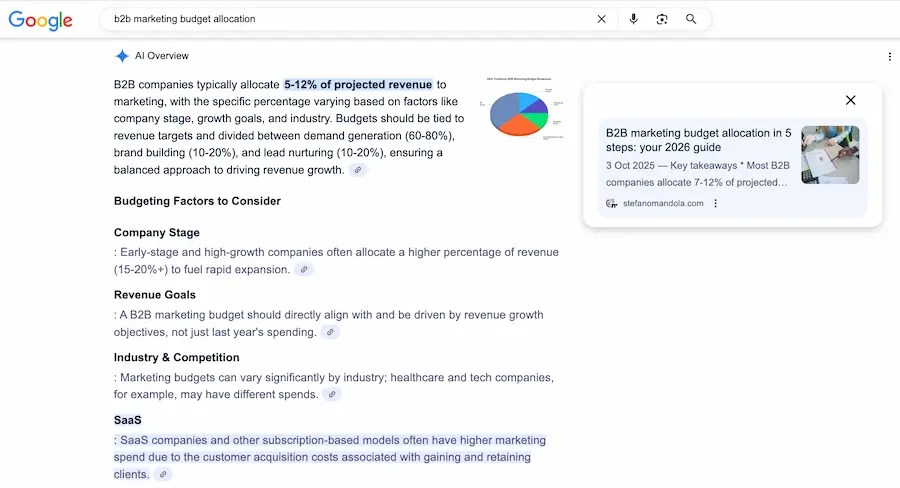
The numbers here are sobering. Negative sentiment about AI’s impact on search rankings jumped 25% between early 2024 and mid-2025. This represents genuine anxiety about traffic and visibility in an AI-dominated search landscape. A SEMrush analysis shows that over 13% of Google queries now trigger AI-generated overviews, a number that continues to grow. While that might seem small, SEO professionals understand the trend’s direction. Forum discussions frequently reference the Gartner prediction of a 25% drop in search traffic by 2026.
It also seems like Google’s AI overviews show clear bias toward certain content types. The discussions reveal that YouTube and LinkedIn content appear disproportionately in AI citations, with one analysis finding “LinkedIn links in AI answers nearly equal YouTube.” This creates a strategic challenge. Traditional website content competes not just with other websites, but with video content and professional social posts that AI systems prefer to cite.
Zero-click search acceleration
The data shows SEO professionals are experiencing firsthand what many predicted — AI overviews often answer questions without requiring clicks to source websites. One analysis noted that traffic patterns are changing as users get answers directly from search results. The statistics suggest AI overview frequency varies significantly by search intent and geography. Informational queries trigger overviews more often than commercial searches, but the trend is expanding across all query types.
Rather than panic, the discussions reveal strategic adaptation. Some SEO professionals acknowledge that “search isn’t dying — it’s fracturing” into new formats including text search, voice queries, and chat interfaces.
The 25% sentiment spike reflects real business concerns. SEO professionals see traffic data changing and recognize they need new strategies to maintain visibility. But the same data shows adaptation rather than surrender.
New acronyms, same fundamentals: GEO, AEO, and AIO
After major AI search features launched, discussions around “Generative Engine Optimization (GEO),” “Answer Engine Optimization (AEO),” and “AI Optimization (AIO)” increased sharply. In practice, most professionals use these terms interchangeably to describe adapting SEO for AI-driven search.
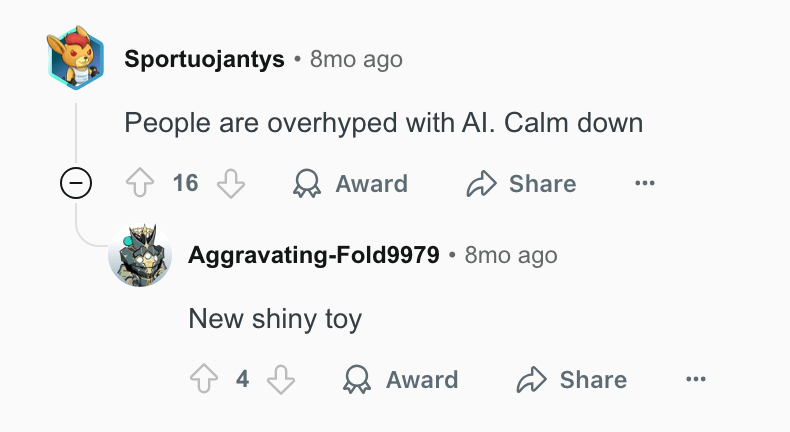
Some professionals dismiss the new terminology as hype. Reddit comments similar to “new shiny toy” and “people are overhyped with AI, calm down” appear regularly in the discussions analyzed. Many see GEO/AEO/AIO as just rebranded SEO best practices.
Google’s official position provides clarity. Danny Sullivan’s guidance that “Good SEO is good GEO” appears throughout the discussions. The same principles apply: quality content, relevant links, and strong user experience still drive visibility, whether in traditional search results or AI-powered overviews.
While terminology usage increased, the analysis reveals few concrete examples of successful GEO/AEO strategies. Most discussions remain theoretical or experimental, suggesting the industry is still figuring out what these optimizations mean in practice. The statistics show SEO professionals feel pressure to discuss AI optimization confidently. One example from the data: an SEO lost a client because another consultant promised “AI technicals” like “schema embeddings analysis” as solutions.
As I prepare to attend a course covering these approaches (whether you call it GEO, AIO, or SXO), I see what the data confirms: the fundamentals remain the same, as I already mentioned when executing WordPress SEO on a Personal Plan, but the way we apply them to AI-driven environments is evolving. Discussions show increased focus on structured data as a way to feed AI systems better information. FAQ schema, Q&A formats, and entity markup are becoming more important as AI systems rely on structured information. The data also reveals growing emphasis on “entity authority” — trusted mentions, brand recognition, and authoritative source signals. AI systems appear to weight established, credible sources more heavily in their responses.
28% of conversations focus on SEO job security concerns in the AI era
The analysis shows negative sentiment about SEO job security rose approximately 28% by May 2025. This represents genuine concern about AI automating traditional SEO tasks and reducing demand for human expertise.
Despite job security fears, many professionals expressed confidence that AI actually creates more SEO work. One expert on LinkedIn joked that AI “will keep all of us in business,” implying SEOs will be needed to fix AI-generated problems.
The discussion data reveals which SEO capabilities professionals believe AI cannot replace:
- Strategic thinking and campaign planning
- Brand understanding and voice consistency
- Creative problem-solving for unique challenges
- Client relationship management and communication
- Quality control and content oversight
The “SEO emergency” trend
Multiple discussions mention a growing demand for “SEO recovery” projects. Websites flooded with low-quality AI content need professional help to restore search visibility. This creates new service opportunities for experienced SEOs.
The statistics show professionals largely believe AI requires them to learn new tactics rather than eliminating their roles entirely. SEO professionals must now speak knowledgeably about AI optimization to maintain credibility. Telling clients “nobody knows” about AI SEO is no longer acceptable. This creates pressure to stay current with rapidly evolving tools and techniques.
Upskilling priorities
Reddit discussions show SEOs are focusing on:
- Learning to optimize content for AI citations
- Understanding new search interface behaviors
- Developing quality control processes for AI-generated content
- Building expertise in structured data and entity optimization
The numbers suggest a separation emerging between “premium” SEO services focused on strategy and quality, versus “commodity” SEO work that AI can automate. Professionals providing strategic insight and creative solutions remain in demand. The consensus appears to be that AI changes the work but doesn’t eliminate the need for human expertise in search optimization.
86% of discussions include experimentation with AI tools and workflows
The discussions reveal SEO professionals are testing various approaches to influence AI systems:
- Seeding Q&A content on forums to influence ChatGPT responses
- Optimizing LinkedIn thought leadership posts for AI citations
- Creating FAQ-structured content to trigger AI overviews
- Building entity mentions and brand authority signals
Schema markup adoption increases: While specific percentages aren’t available, the discussion data shows growing focus on structured data implementation. SEO professionals report experimenting with:
- FAQ schema for direct AI question answering
- How-to schema for process-related queries
- Entity markup to establish topical authority
- Review and rating schema for credibility signals
Voice and conversational optimization: The statistics show increased attention to natural language patterns. SEO professionals are adapting content to match how people ask questions to AI assistants rather than traditional keyword-focused approaches.
Multi-platform strategy emergence: The data reveals SEO work expanding beyond websites. Professionals report optimizing:
- YouTube videos for search and AI citations
- LinkedIn posts for professional query responses
- Reddit and forum content for community-based answers
- Podcast and audio content for voice search results
KPI evolution data: In my own work and the industry discussions, I’m seeing measurement shifts toward:
- Share of voice in AI-generated responses
- Brand mention frequency across AI systems
- Entity recognition and authority scores
- Citation attribution in AI overviews
TikTok and visual search trends: Some discussions mention Google indexing TikTok and Instagram content more prominently. This reflects AI systems incorporating visual and short-form video content into search results.
Tool experimentation statistics: While comprehensive data isn’t available, forums show SEO professionals testing:
- GPT-4 and Claude for keyword research and content briefs
- AI tools for internal linking audits and recommendations
- Automated schema markup generation and validation
- Competitor analysis through AI-powered research tools
Success measurement challenges: The discussions reveal difficulty measuring AI optimization success. Traditional metrics like organic traffic become less meaningful when AI systems answer questions directly. SEO professionals are developing new ways to track visibility and influence in AI-powered search results.
The experimental nature of these tactics reflects an industry in transition. SEO professionals are testing various approaches while the AI search landscape continues evolving rapidly.
The bottom line & my key takeaways
The data tells a clear story. SEO professionals started 2024 excited about AI’s potential, but 2025 brought reality checks. The 20% rise in negative sentiment about AI content and 25% jump in ranking anxiety reflect genuine industry concerns, not just fear-mongering.
But the same data reveals adaptation, not defeat. Technical SEO embraces AI tools (35% positive sentiment increase), while content creation maintains human oversight. AI-focused SEO — whether you call it GEO, AIO, or SXO — is gaining traction, even as professionals remain skeptical of pure hype.
The prevailing consensus
Traditional website optimization now extends to social platforms, AI citations, and entity authority. Professionals who adapt to these changes stay relevant, while those clinging to old methods risk obsolescence. That’s why I’m attending an AI SEO course. These statistics convinced me that structured learning and real-life knowledge exchange are crucial. SEO professionals need practical strategies that go beyond buzzwords and deliver results in an AI-driven search environment.
The data shows we’re in a transition period. AI search features are expanding, but traditional SEO fundamentals still matter. The winning strategy combines proven optimization principles with new AI-aware tactics.
What do the numbers predict for the end of 2025 and 2026? Continued growth in AI search features, but not the traffic apocalypse some feared. SEO professionals who adapt their skills and expand their optimization focus will thrive in this new landscape. The statistics reveal both challenge and opportunity. Yes, the game is changing. But the same data shows that strategic, quality-focused SEO work remains valuable, perhaps more than ever.
Methodology
This analysis draws from a comprehensive review of over 500,000 SEO industry posts and threads, spanning August 2024 to August 2025. The research methodology focused on capturing authentic professional sentiment and experiences.
Data sources:
- Reddit SEO communities and discussion threads
- LinkedIn professional posts and comment discussions
- Industry surveys
- Professional forum discussions and community platforms
Sentiment analysis: Primary sentiment data comes from a specialized Reddit-based analysis tracking SEO professional attitudes toward AI implementation. This study measured sentiment changes across multiple discussion threads over the 12-month period, providing quantifiable metrics for attitude shifts within the professional community.
The research examined actual practitioner discussions rather than executive interviews or marketing content. This approach captures the on-the-ground reality of SEO professionals implementing AI tools and strategies in their daily work.
Statistical validation: Where possible, sentiment percentages and trend data were cross-referenced across multiple sources. When specific metrics are cited (such as the 20% increase in negative sentiment), these reflect documented analysis from the source materials rather than estimates.
Limitations: The analysis relies on publicly available discussions. Platform bias exists as some sources may attract different professional demographics than others.
Want to discuss these AI SEO trends and strategies? Connect with me on LinkedIn. I’m always interested in hearing real-world experiences and sharing insights.



 Stefano Mandola
Leave a comment